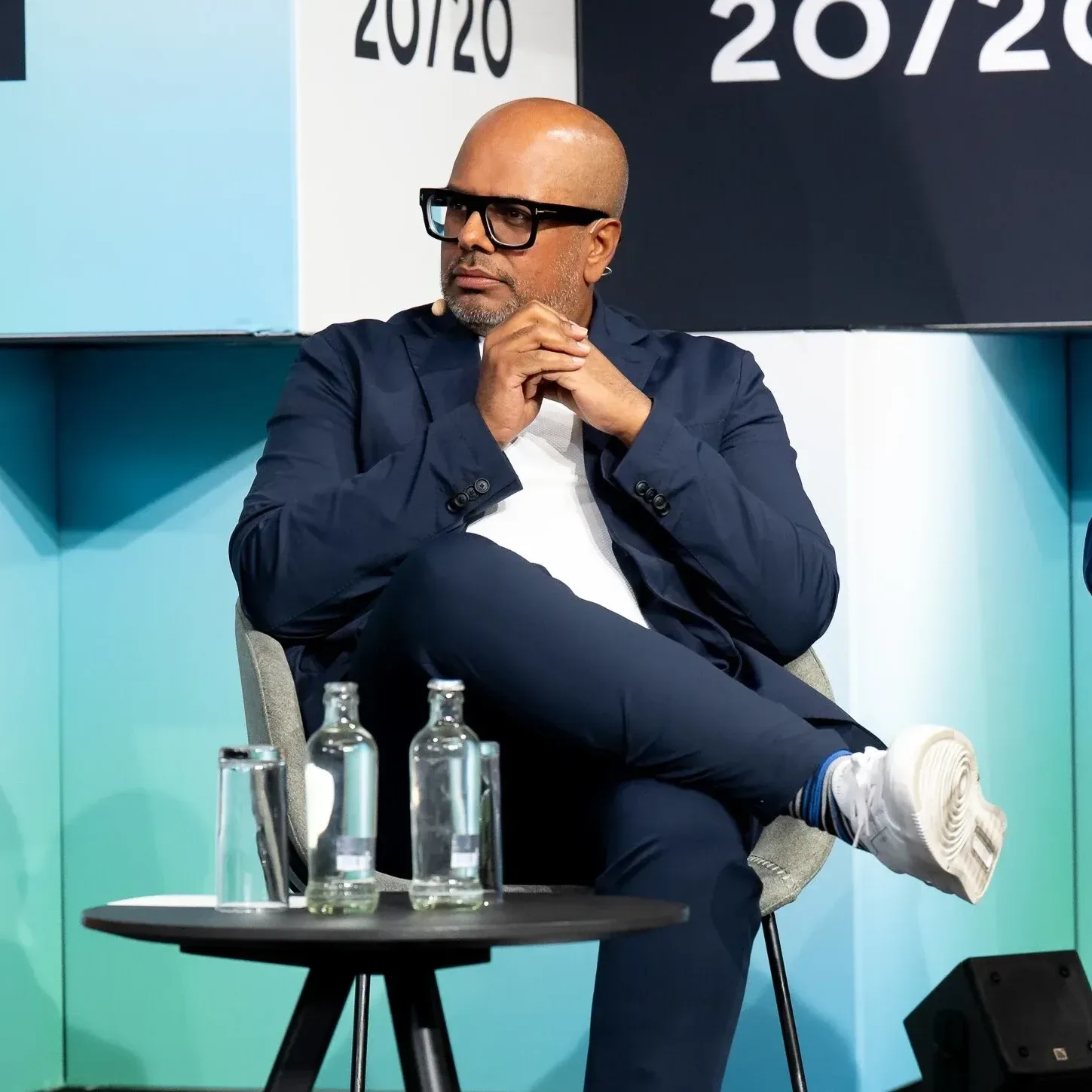
A life against the fraud machine
For over 20 years, Riten Gohil has been on the frontlines of the fight against fraud, chasing criminals through London streets, dismantling multi-million-pound scams, and building cutting-edge defences for the digital age. Today, as Digital Identity, Fraud & AML Evangelist at Signicat, his mission remains the same: make the online world safer for everyone.
–“Fraud will never disappear, but neither will the people fighting it. And as long as I’m in the game, I plan to keep them one step behind.”
From perfume salesman to tracking criminal rings
Riten’s journey began far from the world of fraud prevention. After starting (and quickly abandoning) a media degree, he recalls: “My plan was to take a year off and go back to university, but I ended up taking different jobs instead, so I am technically still on my year off!”
One of those jobs was selling perfume in a department store, a role that unexpectedly honed a skill that would define his career: the ability to connect with people quickly and effectively.
A first proper job in debt collection at the UK’s Department for Social Security eventually led him to a government-led organised fraud investigation unit. There, he transformed into a skilled investigator, following suspects perpetrating million-pound frauds day and night, conducting high-speed surveillance, preparing court cases, and analysing complex evidence trails. “It was fun,” he says, “but every aspect of the job taught me the importance of attention to detail.”
–“In my late 20’s, it was an electrifying experience to handle cases with such significant impact. The hours were brutal, but it was the best training I could have asked for.”
Tackling £50 million schemes in his 20s
Eager for bigger challenges, Riten joined the UK’s Serious Fraud Office, investigating some of the nation’s most complex cases, from organised scams to £50 million market manipulation schemes. These were long, meticulous projects requiring endless document reviews, interviews, and cross-agency collaboration with law firms, forensic accountants, and industry experts. “I learned a lot about finance operations — reading company accounts, sales ledgers, purchase ledgers — and even digging through warehouses of documents to find a needle in a haystack,” he explains. This period sharpened his expertise and prepared him to combat financial crime in any form. “In my late 20s, it was an electrifying experience to handle cases with such significant impact,” he says. “The hours were brutal, but it was the best training I could have asked for.”
–“I wanted to apply my expertise to emerging industries that faced growing fraud risks and help shape them.”
Switching sides (from catching criminals to outsmarting them)
After gaining years of investigative experience, Riten shifted gears from public service to the private sector as part of the fraud financial team at Ernst & Young. His motivation? The chance to work on dynamic challenges while expanding his horizons. “I saw private sector peers earning more with roles that seemed equally, if not less, demanding.” But for Riten, it wasn’t just about money; it was about impact. As he puts it: “I wanted to apply my expertise to emerging industries that faced growing fraud risks and help shape them.”
He soon entered the online gaming sector, where he helped design fraud prevention systems long before digital transactions became mainstream, leading him to see the foundation of what is now Flutter Entertainment.
Later, Riten joined initiatives in the payments sector across Europe and even moved to Paris to build a digital payments wallet for a banking startup years before PayPal entered Europe. “That project taught me resilience,” he reflects. “It showed me how innovation could come crashing down due to external market events,” referencing the 2001 market disruptions that halted the funding his CEO had secured in New York after September 11th.
Returning to the UK, Riten continued his journey in the payments sector, landing a role at APACS (now UK Finance) during a pivotal time. Digital and online channels were booming, but so were sophisticated forms of fraud. As cheque and ATM fraud declined, criminal networks shifted to digital channels. APACS was at the forefront, rolling out EMV Chip and PIN cards across the UK to combat fraud across multiple environments. Riten played a key role in developing strategies, uniting online merchants from sectors like travel, gaming, and retail, and driving collaboration on best practices.
It was during this period that he first met Andy Lee, the mastermind behind Sphonic: “There were a lot of social events at APACS back then, which helped us stay in touch. I was tackling some really interesting challenges during that time.” One of those challenges? Bringing digital risk management solutions into a modern UK framework.
–“We realised the need for a more coordinated response to educate consumers on phishing, protecting documents, and using technology to stay safe. It’s funny; the advice we were giving almost 20 years ago is still just as relevant today.”
Driving the UK’s first digital identity revolution
Around 2005–2006, the UK government under Tony Blair began investigating the launch of a digital identity system and also the potential for how it would interact with the banking sector. APACS played a key role in this programme: “We were analysing how the banking industry could interface with the identity system: the benefits, the costs, and whether banks would provide data or simply use the system.”
Riten worked closely with senior officials at the Home Office, advocating for the system under the right controls: “We saw it as a strong tool against fraud, but the focus then wasn’t on customer experience like it is today. Back then, it was all about fighting fraud and building better systems for consumers.”
But his contributions didn’t stop at policy advocacy. Riten played an essential role in setting up the UK’s first multi-agency victim support group for fraud. “We realised the need for a more coordinated response to educate consumers on phishing, protecting documents, and using technology to stay safe. It’s funny; the advice we were giving almost 20 years ago is still just as relevant today.” This initiative brought together key organisations like Experian, Equifax, Government bodies, and others to pool resources and fund a nationwide campaign.
–"Being recognised for my work in fraud prevention was a moment I’ll never forget."
Meeting the Queen, the world’s safest identity
"One of my proudest achievements from that time was being invited to Buckingham Palace to meet the Queen," Riten shares with a smile. "The Home Office selected individuals who had made significant contributions, and being recognised for my work in fraud prevention was a moment I’ll never forget."
Reflecting on his conversation with Her Majesty, Riten recalls: “She went around the room speaking with everyone, and when she got to me, she asked, ‘What do you do?’ I explained that I’d been working to protect consumers and had launched the UK’s first campaign tackling identity fraud. She said, ‘Yes, I’ve heard a lot about this issue. It’s a significant problem.’ I couldn’t help but reply, ‘Your Majesty, I think you can be quite comfortable that no one’s going to steal your identity, you’re probably the safest person in the world.’ We both laughed. It’s a memory I’ll always treasure, especially now that she’s no longer with us. It was a truly special experience.”
–"It wasn’t just a job; it was important work."
Visa’s big bet: Taking Verified by Visa from 2% to global adoption
“Visa poached me from APACS,” Riten recalls. “They wanted me to run the European Identity Authentication Programs.” Visa tasked him and the team with driving adoption of Verified by Visa across Europe, which at the time had a dismal 1–2% usage rate.
With years of experience working closely with online retailers and merchants, Riten already knew the community well: “I’d spent much of my career immersed in the intricacies of the protocol, so I had the in-depth knowledge Visa needed to innovate and make progress.”
He wasn’t just focused on authentication. He also led cutting-edge product development. “I ran a programme that embedded keypads and displays directly into credit cards for authentication way before mobile phones became the go-to for verification. The idea was simple: your credit card would double as your security token,” he explains.
The project took him around the globe (Australia, Asia, the US…), collaborating with partners and regulators.
During his seven-year tenure at Visa, Riten became a key stakeholder in identity, child protection, and risk management. “Child protection became a recurring theme for me,” he shares. “At APACS, I’d already tackled critical issues like online gambling risks and child protection, so this expertise were called up on when such issues confronted the industry. I worked on mitigating risks and helped the team shape media narratives to ease public concerns. It wasn’t just a job; it was important work.”
As Riten puts it with a laugh, his time at Visa was “a hell of a ride.” But even the best rides come to an end. Visa’s global restructuring prompted a new chapter: “Sometimes, you just know it’s time to move on and see what else is out there.” With a few opportunities on the table, he found himself drawn to Sphonic. “A certain Mr Andy Lee twisted my arm into joining the project as CEO,” he recalls with a grin.
That was 2012, a pivotal moment. And with that, the stage was set for the next chapter. Sphonic, a London startup focused on transaction monitoring and fraud orchestration.
–“No one was doing what we were doing at the time. It was about seeing the gaps and filling them with intelligence-led solutions.”
Building Sphonic and disrupting digital fraud prevention
Sphonic pioneered fraud orchestration platforms, helping enterprises manage fraud, AML, KYC, and compliance challenges. “No one was doing what we were doing at the time. It was about seeing the gaps and filling them with intelligence-led solutions.”
Bootstrapped and operating without large budgets, Sphonic grew organically, winning major clients like Visa, Funding Circle, Flutter, Paysafe and Zopa.
A defining moment came during the 2014 Brazil World Cup. As Betfair geared up for the surge in traffic ahead of the tournament, they selected Sphonic through a competitive RFP process, impressed by its scalability and innovation. Within just three weeks, the platform went live, proving its resilience during one of the world's largest sporting events. Monitoring traffic daily, the team ensured everything ran smoothly.
–“I stayed on because I believe in the products. Signicat isn’t just a company; it’s a cause, a platform aimed at making compliance simpler and fraud prevention more effective.”
Joining forces with Signicat to go bigger, faster
By 2021, Sphonic was profitable and thriving. Faced with the option of raising venture capital or selling, the founders chose Signicat, a leader in digital identity solutions. “We could have taken VC funding (we were turning a profit and growing quickly), but it made more sense to sell to a company with its own ambitions, where we could scale together. That’s why the Signicat story resonated with us. It aligned perfectly with our vision."
Riten, alongside Andy, Terry, Mike, and Sam, joined Signicat after the acquisition. It was an easy choice for him: “I stayed on because I believe in the products. Signicat isn’t just a company; it’s a cause, a platform aimed at making compliance simpler and fraud prevention more effective.”

–“It’s all about balance.”
Life outside the fight: Family, marathons, cricket, and five World Cups
Riten juggles work, life, and everything in between with passion and practicality. “It’s all about balance,” he says. He starts his mornings early, checking emails and global updates before helping his kids get ready for school. His days are packed with client calls, pitches, and networking, often stretching late into the evening.
When working from home, he powers through multiple back-to-back calls; at the office, he focuses on face-to-face time with clients, the team, or networking over coffee. Prepping for big pitches, QBRs, or client meetings is a key priority, alongside supporting the sales and pre-sales teams.
Staying sharp on competition in the highly competitive UK market is a must for Riten. “When we sold the company, there were just three orchestrators in the space… Now there are 19, all active in the UK. Part of my job is understanding what they’re doing and how we can adapt.” Growth, client relationships, and staying ahead remain at the core of his day.
Outside work, Riten is an avid traveller (having attended five World Cups) and a passionate cricket fan, even marrying at London’s Kia Oval (home of Surrey County Cricket Club). He loves cooking, hosting friends, and staying active, having completed four marathons in one year, including one in India.
Despite long hours, he prioritises his family: school drop-offs, bedtime routines, and shared adventures always come first.

–“The biggest lesson? Adaptability. The nature of fraud changes constantly. What worked 10 years ago wouldn’t solve today’s problems.”
Hard lessons from two decades fighting fraud
Looking back, Riten recognises how his experiences shaped vital skills. “The biggest lesson? Adaptability. The nature of fraud changes constantly. What worked 10 years ago wouldn’t solve today’s problems.”
He also highlights the importance of collaboration. “Fraud isn’t something companies can tackle in isolation. One of my early achievements was forming multi-agency working groups in the UK, bringing together banks, government, and industry leaders to share solutions.”
Most importantly, Riten champions the value of purpose-driven work. “From government days to startups, I’ve seen the powerful impact of protecting individuals and organisations from harm. That’s what drives me every day.”
–"When you believe in what you do, it’s far easier to handle the challenges that come with any demanding field."
Riten’s advice for future fraud fighters
For those looking to make a difference in fraud prevention and compliance, Riten has clear advice:
- Be curious yet disciplined: "Fraud professionals need a natural curiosity to uncover the truth, but that curiosity must be backed by discipline and precision."
- Understand the bigger picture: "Fraud isn’t just a technological problem. Understand the financial, legal, and human elements to become a well-rounded professional."
- Keep learning: "Regulations, technologies, and fraud tactics evolve rapidly. Stay ahead by committing to lifelong learning."
- Work for a cause: "When you believe in what you do, it’s far easier to handle the challenges that come with any demanding field."
One step ahead, always
Riten’s career mirrors the values that drive Signicat’s mission to combat digital crime and safeguard the digital economy. “Signicat embodies the principles I’ve followed throughout my career,” Riten shares. “It’s about building trust in a digital-first world while delivering innovative, secure, and scalable solutions.”
Through his story, Riten exemplifies the dedication, resilience, and expertise it takes to stay ahead in the fight against fraud. “Fraud will never disappear,” Riten says, “but neither will the people fighting it. And as long as I’m in the game, I plan to keep them one step behind.”
–Explore career openingsDo you want to work with people like Riten?