Facial Recognition: What It Is and How It Works
Facial recognition, also known as face recognition, is a biometric verification method that identifies or verifies a person by analysing their unique facial features. This technology plays a crucial role in online identification and digital onboarding, providing a secure, compliant, and seamless experience for both businesses and users.
But how does facial recognition work? What are its real-world applications, and how safe is it? This guide explains the fundamentals, technologies, and benefits behind facial recognition systems, and how Signicat’s solutions use advanced biometrics to make digital identity verification fast, secure, and trustworthy.
What Is a Facial Recognition System?
A facial recognition system is a form of biometric authentication that verifies an individual by analysing facial characteristics captured from an image or video. Acting like a digital face scanner, this facial recognition software analyses and compares facial data to confirm a user’s identity.
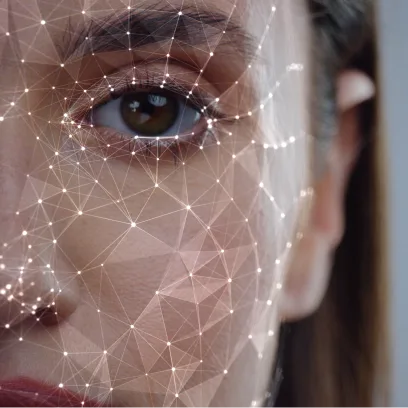
Facial recognition technology works by measuring the unique geometry of each person’s face, such as the distance between the eyes, the shape of the nose, and the contour of the jawline. These measurements create a mathematical representation known as a facial template, which can be used for identification, verification, or authentication.
A facial recognition system only needs a device equipped with a camera to capture and process biometric data. Unlike passwords, PINs, or fingerprint scanners, facial recognition technology uses mathematical and dynamic facial models that are extremely difficult to replicate, making it one of the most secure and efficient verification methods available.
The purpose of face recognition technology is to match an incoming facial image with stored data in a database, ideally in real time. This level of performance is what distinguishes advanced biometric facial recognition software from less sophisticated solutions.
How Does Facial Recognition Work?
Facial recognition systems follow a four-step process:
1. Capture: A camera collects an image or video of a person’s face in either 2D or 3D format, depending on device capabilities.
2. Analysis: The software identifies key facial landmarks such as the eyes, nose, and mouth.
3. Comparison: These landmarks are converted into a numerical code (a facial signature) and compared against existing templates in a database.
4. Verification: If the data matches an existing profile, access or verification is granted.
2D vs 3D Facial Recognition
2D facial recognition captures a flat image and compares it to stored data. It’s faster but more sensitive to lighting or angle variations. 3D facial recognition, on the other hand, uses depth sensors to capture a more detailed model of the face, improving accuracy and reducing false matches, especially in professional facial recognition systems used for secure digital onboarding.
AI and Machine Learning in Facial Recognition
Modern facial recognition technology relies heavily on AI and machine learning to detect and analyse subtle facial features. These technologies help prevent fraud, improve liveness detection, and ensure compliance with regulatory standards. AI-driven identity verification is also key to Signicat’s video identity verification and KYC selfiesolutions, where advanced algorithms confirm that the user is real and present during authentication. Learn more about how AI-driven identity fraud detection works.
Meet Signicat’s Advanced Facial Recognition Solutions
Signicat offers a complete suite of electronic identity verification (eIDV) tools powered by advanced facial recognition technology. From NFC and image-based verification to video identity verification, our solutions make remote onboarding faster, safer, and fully compliant with European regulations.
Whether you’re streamlining KYC checks or verifying customers across borders, Signicat’s biometric facial recognition ensures secure, high-quality onboarding for financial institutions, telecom providers, and other regulated industries.
Explore our services:
- Digital Onboarding
- Video Identity Verification
- Online Bank Account Verification
- KYC
Facial Recognition Examples in Real Life
Facial Recognition in Retail and Marketing
Retailers use facial analysis to identify loyal customers, reduce theft, and create personalised in-store experiences. It helps bridge physical and digital shopping by linking customer data across channels.
Facial Recognition in Airports and Border Control
Many airports now rely on facial recognition technology to automate check-in, boarding, and border control. This speeds up passenger processing while maintaining strict security standards.
Facial Recognition in Security and Law Enforcement
Security agencies and law enforcement bodies use facial recognition systems to identify suspects, verify identities in crowds, and support missing person searches, combining biometric facial recognition with national databases.
Facial Recognition in Healthcare
Hospitals and clinics use facial recognition software to control access to patient data, monitor staff attendance, and enhance security in restricted areas.
Other Applications
Beyond these industries, facial recognition is also used for unlocking personal devices, authorising digital payments, and enabling online bank account verification during onboarding.
What Are the Benefits of Facial Recognition?
Facial Recognition Pros
- Speed: The fastest and most efficient verification process for remote identity checks.
- User Experience: Seamless and contactless, requiring no physical tokens or passwords.
- Security: Each face is unique. Facial recognition biometrics make it extremely hard to falsify identity.
- Compliance: Facial recognition via video identification is recognised as a compliant method for high-risk operations such as signing contracts or opening bank accounts.
- Safety: By reducing identity fraud, facial recognition helps keep both users and businesses safer online.
Facial Recognition Cons
While highly effective, facial recognition does have limitations. Accuracy can vary depending on lighting, camera quality, and angle. There are also ongoing discussions about privacy and ethical use, especially in public surveillance and data storage. Organisations must ensure their facial recognition systems meet regulatory standards such as the GDPR and the upcoming EU AI Act.
FAQ Facial Recognition
Still curious about facial recognition? These FAQs explain how biometric verification works and why it’s a trusted solution for secure online identification.
-
Yes. Facial recognition is legal in Europe, but it is strictly regulated by the GDPR and the EU AI Act. Organisations must ensure transparency, data minimisation, and user consent when processing biometric data.
-
No. Facial recognition typically requires the user’s eyes to be open and a certain level of facial activity to confirm liveness.
-
No. Most facial recognition systems detect eye movement as part of liveness verification, preventing spoofing.
-
Yes. Many countries, including those in the EU, now use facial recognition software to verify ePassports and identity documents during border control.
-
Yes. AI and machine learning are the core technologies behind facial recognition software, improving accuracy and fraud detection.
-
Facial recognition technology combines AI algorithms, 2D and 3D imaging, and biometric databases to identify individuals accurately and securely.
-
Yes. Law enforcement uses facial recognition systems to identify missing persons or suspects in public spaces using surveillance and shared databases.
-
Partially. Modern face recognition apps and software are trained to recognise masked faces by focusing on visible areas like the eyes and the forehead, though accuracy can decrease.
-
Not exactly. Facial biometrics refers to the physical data points used for identification, while facial recognition is the process of analysing those data points for verification or authentication.