
The architect who designs systems while walking around the house
Abraham didn’t fall into software because he’d always dreamed of writing code. He got there the long way round, via hardware curiosity, a mild existential wobble at the end of university, and a deep interest in how complex systems work internally.
–“As an architect, I feel my mission is to work towards technical excellence. That means making our applications performant, secure, resilient, and easy to maintain and operate.”
Today, he’s a Software Architect at Signicat, working in digital identity. If you’ve ever tried to log in, verify yourself, or share sensitive data online and wondered what makes it feel safe enough, Abraham spends a lot of his time thinking about exactly that.
He frames his role in the simplest terms: not as titles or diagrams, but as outcomes. “As an architect, I feel my mission is to work towards technical excellence,” he says. “That means making our applications performant, secure, resilient, and easy to maintain and operate.”
He has turned curiosity and creativity into something greater than code: a culture that celebrates building, learning and experimenting together. He helps build digital identity solutions that protect millions, but what really defines his story is how he builds community around technology.
Hardware first, then the real fascination
Abraham didn’t start out chasing a software career. When he was choosing what to study, he “wasn’t interested in software development itself” and he “didn’t even know it existed”. What pulled him in was the hardware: the physical reality of the machine, and the satisfaction of understanding how each component works.
Later, with the benefit of experience, he put a name to what he’d been circling all along. “Years later, analysing my other interests and hobbies, I realised it was about complexity”, he says. “I like to understand how complex systems work.”
In identity, that curiosity is useful because complexity is built into the job. You’re designing systems that have to be trusted by default, even by users who will never think about the engineering behind them. The work is often invisible when it’s going well. It’s very visible when it isn’t.
–“I decided to go for it and give software a try. As soon as I started working, I loved it.”
The moment it clicked: “I decided to go for it”
Even after university, Abraham wasn’t completely sure. He had doubts about whether he wanted to spend his days in front of a screen. “I had my doubts when I finished my studies, about whether the software industry was something I wanted to work in,” he says, “especially the part about being sat in front of a computer the whole day.”
Then he did what a lot of thoughtful engineers do when they’re uncertain: he tested the assumption. “I decided to go for it and give it a try,” he says. “As soon as I started working, I loved it.”
It wasn’t just the act of building. It was the learning curve, the problem-solving, and the constant sense that there was always another layer to understand. In those early years, he developed a habit that still shows up in how he works today. He “loved testing different tools” and then going further, “doing a deep dive into library code and seeing how they were implemented and how they work internally”.
That kind of curiosity tends to make you the person others go to when something feels off in production. Not because you always have the answer instantly, but because you have the instinct to follow the thread until it makes sense.
Pressure teaches you what matters
Before joining Signicat, Abraham moved through different environments: consultancy, large corporates, and startups. He describes it as experiencing “different flavours” of architecture, from hands-on development to research and proofs of concept to domain architecture. Different contexts, different constraints, same underlying lesson: pressure tells the truth about a design.
One pivotal project came in e-commerce. He redesigned an order management system and migrated it towards a microservice architecture. It’s the kind of work that can look neat on a diagram, until the real test arrives. For them, that moment was Black Friday.
“With the new design,” he says, “we managed to achieve record figures of tens of thousands of orders processed per minute during Black Friday.”
You don’t go through that without changing how you think. You learn to take load seriously. You learn to expect partial failures. You learn that systems are run by humans on imperfect days, and that resilience is not a feature you bolt on later. It’s a mindset you carry into the first decision.
–“Trust is built as much through boring reliability as it is through clever design.”
Why Signicat: modern engineering, real responsibility
Abraham joined Signicat through the Spanish startup ElectronicID. When Signicat acquired the company and the teams merged, he was clear about what he hoped to find. He expected an “engineering culture”, with “a more modern way of working, like DevOps and continuous deployment”, and “care for resilience and security”.
For Abraham, “modern” is not a slogan. It’s a practical way of working that helps teams ship safely, learn quickly, and keep systems stable. And in digital identity, the stakes are real. Security is the baseline, the thing you start with, not something you add at the end of a sprint. But Abraham is equally interested in the quieter side of trust: systems that behave consistently, that are operable, that don’t surprise the people running them.
In his world, “trust is built as much through boring reliability as it is through clever design.”
–“Working as a tribe architect is a lot about collaborating with different teams. So it’s a lot about communication, and, being honest, asking for stuff.”
The migration that tested the team, and the platform
Ask Abraham about the most important work he’s done recently, and he goes straight to the cloud migration. “Probably the most important project for me this year was completing the ElectronicID migration,” he says. He had “the luck to take a lead role” in modernising applications to work properly on the new provider.
Large migrations have a reputation for being messy for a reason. There are technical decisions layered on top of inherited constraints. There are dependency knots. There are edge cases that appear only when real traffic hits a new path. There’s also the human coordination required to keep services stable while the foundations are shifting. But with “lots of smart people involved” and it being treated with the importance it deserved, it was a success.
How this was treated it’s the kind of programme that tells you something about a company’s relationship with engineering. Whether it’s willing to invest in the hard work that makes everything else possible, even when the benefits are felt more in stability than in flashy screenshots.
–“A lack of reliability, meaning there are bugs and issues in the application, does not contribute to you feeling confident that your data are being properly taken care of.”
Trust is not a slogan; it shows up in the day-to-day
In digital identity, “trust” can sound abstract until you translate it into day-to-day engineering. For Abraham, it shows up in what happens after a system is built: how it’s run, how it’s monitored, how it recovers, and how easy it is to change without breaking.
That’s why he keeps returning to operability. It’s not enough for a service to be correct in theory. It needs to be dependable in practice. It needs to behave when something upstream fails. It needs to fail safely when it has to fail. It needs to be understandable by the people on the receiving end of an alert.
He puts it plainly from the user’s point of view: “A lack of reliability, meaning there are bugs and issues in the application, does not contribute to you feeling confident that your data are being properly taken care of.” In other words, reliability is part of the promise. If the system is flaky, trust drains away, even if the underlying security work is strong.
This is the part of engineering that rarely makes for glamorous storytelling, but it’s the work that keeps a digital identity product feeling solid. Quietly. Repeatedly. Every day.
–“Some years ago, I noticed that walking helps my thinking process. Walking around the house, head down, absorbed in technical designs might be surprising, and even concerning."
How he works: communication, diagrams, and a quiet loop around the house
Architecture is often framed as big decisions, but Abraham’s day-to-day is more grounded: alignment, clarity, and collaboration. “Working as a tribe architect is a lot about collaborating with different teams,” he says. “So it’s a lot about communication, and, being honest, asking for stuff.”
A typical day includes documentation, diagrams, and a fair amount of Slack. He works fully remote, and has done since before Signicat. The hard part is not the tooling, it’s the human logistics: “the most challenging part is the different lunch breaks across Europe when scheduling a meeting,” he laughs.
When he needs to think deeply, he strips the day back to the simplest conditions. “It’s complete silence for me,” he says. He used to listen to classical music, but even that can become noise when he’s running a design through real-world scenarios.
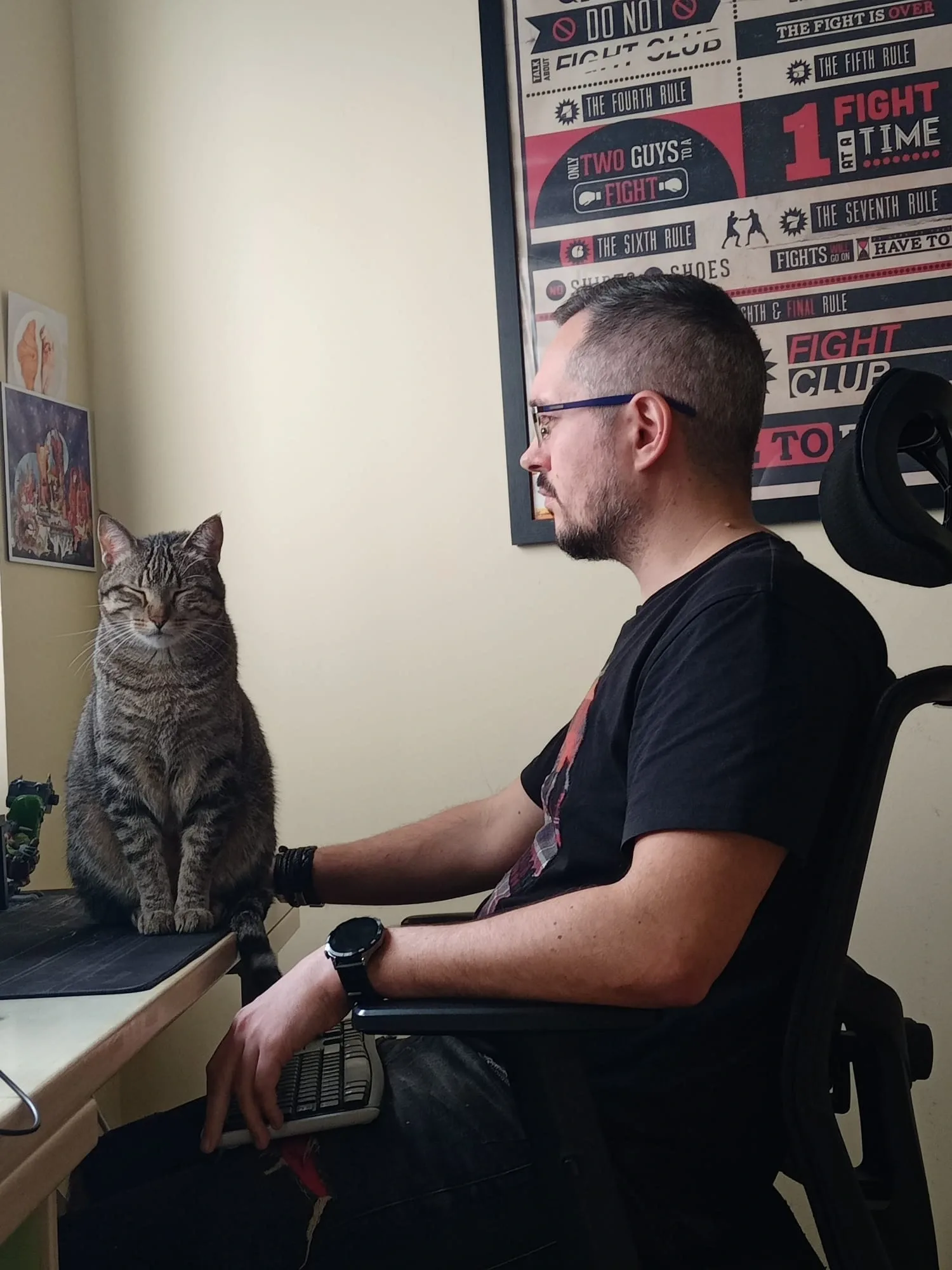
Then comes the habit his colleagues tend to remember. “Some years ago, I noticed that walking helps my thinking process,” he says. So when he’s preparing a meeting or stress-testing a technical design in his head, he sometimes takes a lap around the house, quietly, turning the system over from every angle. He knows it looks odd. “Walking around the house, head down, absorbed in technical designs might be surprising, and even concerning,” he laughs.
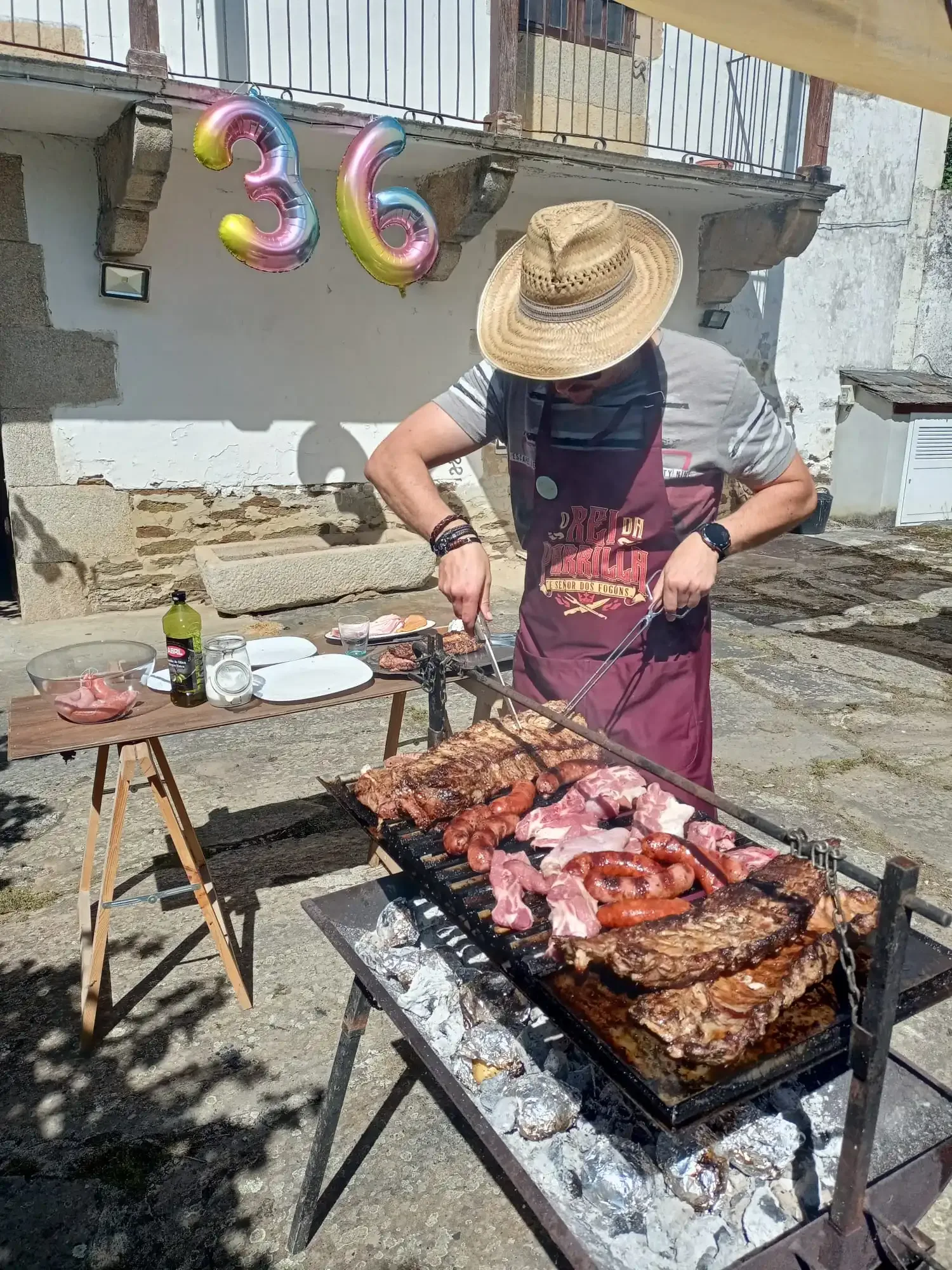
Off the clock, he’s not all systems and silence. He enjoys gathering with friends, getting outside when he can, and doing barbecues. Good food, familiar people, a few hours where nothing needs a diagram.
–“I would repair an old stone house in a small village or even build a car engine from scratch.”
What he’d build if he weren’t in tech
Ask Abraham what he’d do if he weren’t working in software, and he doesn’t reach for anything glamorous. He reaches for something you can take apart and understand with your hands. “I would repair an old stone house in a small village,” he says, “or even build a car engine from scratch.” Different materials, same instinct: learn the system, respect the constraints, make it reliable.
It makes perfect sense when you’ve heard how he talks about engineering. He likes systems with rules, constraints, and history. A stone house has all three. Nothing is plug-and-play. You have to trace what’s there, work out what’s load-bearing, then improve it without breaking what still works. An engine is the same kind of puzzle, just louder. Every part has a purpose. Every decision has consequences. There’s nowhere to hide if you cut a corner.
Even outside tech, he’d still be doing what he does now at Signicat: learning a complex system, respecting how it fails, and taking quiet satisfaction in making it run reliably.
What’s next: long-term direction, and the craft of reliability
As for what’s next at Signicat, Abraham is looking ahead with the new tribe structure. He’s working with other architects to map out the software landscape for the next three to five years and connect it to business goals. He’s also been involved in major releases, including work linked to a European national health system, where careful monitoring and early issue-spotting can make the difference between a smooth launch and a painful one.
Ask what he wants more of, and he goes back to the craft: improving as an architect, expanding his knowledge base, and going deeper on resilience, performance, and platform engineering. The foundations that make modern services easier to run, change, and trust.
If you’re a mid-level or senior engineer reading this and wondering whether Signicat is the kind of place you could grow, his story offers a simple clue. There’s meaningful work in digital identity, and there’s room for the sort of thinking that takes reliability seriously. The kind that happens in silence, and occasionally on a lap round the house.
–Explore career openingsDo you want to work with people like Abraham?