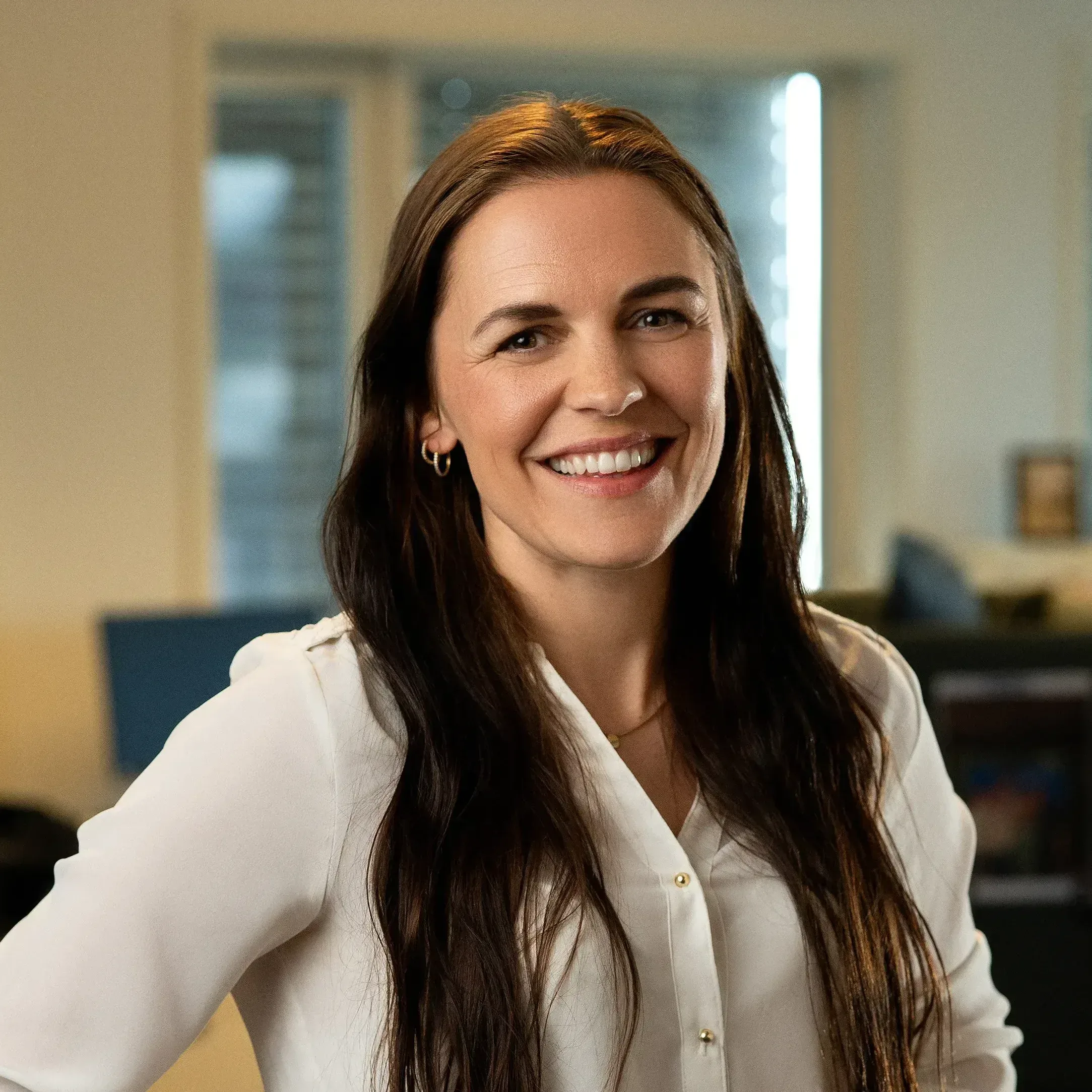
The leader who treats curiosity as a career strategy
Maja didn’t enter tech because she was certain it was her place. She entered because it wasn’t. “For me, it was an area that I did not know much about,” she says, “so it was more like ‘Here is something I do not know anything about, let's learn it’.”
–“We need to be careful when developing tech. It is powerful and needs to be done with awareness.”
That sentence has quietly shaped an 11-year career at Signicat, where she’s now a Senior Engineering Manager, Tribe Lead Data & Analytics, Product Owner Analytics & Billing. It’s a career built on trust, security, and the unglamorous work of making systems and teams reliable. Maja is senior enough to talk about delivery, data platforms, fraud detection and product decisions. She’s also grounded enough to talk about mornings, motivation, and what it takes to keep going when the tempo gets high.
From psychology to technology, and back to people
For a long time, Maja thought she’d become a psychologist. “Understanding people, who we are, why we act as we do… has always been of my interest,” she says. But growing up as a teenager in the late 90s, surrounded by early mobile phones and an internet that made the world feel wide open, she got a different idea too: “I got the impression that nothing is impossible.”
She describes tech as something “created by humans for humans”, and for her the pull was never either-or. “It does not need to be people or tech,” she says. “My path can be combining those two.” That blend shows up in how she leads today. She’s deeply interested in how systems shape behaviour, and how behaviour shapes systems.
During her thesis, she spent months at St. Olavs Hospital in Trondheim studying how patient alarm technology affects staff and patient safety: what counts as “enough” information, how alerts should be delivered, and how people can respond when they’re already mid-task, the split-second pressure of getting the right information in the right way. She remembers thinking about simple, vital questions: “What is enough information for the nurses and doctors, how should they receive it, how to ack the alarm if they are busy with both hands.”
It’s the kind of experience that stays with you. You stop thinking of “users” as an abstract group. You see actual people trying to do their jobs, sometimes with an alarm interrupting them at the worst moment. “We need to be careful when developing tech,” Maja says. “It is powerful and needs to be done with awareness.”
–“It is not hard, it is tech. We, the humans, created it. It is not magic.”
The turning point: tech isn’t magic
Maja’s first big step was simply choosing the tech direction. The second came a couple of months into her first job, when the gap between what she wanted to do and what she could do confidently felt steep. She was new, and everything moved fast.
She spoke to a family friend who gave her a line she still remembers: “It is not hard, it is tech.” The point wasn’t to dismiss the challenge. It was to make it solvable. Humans made it. Humans can understand it. “We, the humans, created it,” she says. “It is not magic.”
Maja went back to work and, in her words, “never doubted my tech path decision ever again.” After that, she says, there were “so many minor turning points”. The kind that don’t get a headline, but add up to a career: opportunities taken, new responsibilities, moments where you realise you’re capable of more than you thought last year.
–“What a company! I did not look anywhere else for my next place to be.”
Why Signicat: love, home, and a company that kept growing
Maja is disarmingly honest about why Signicat, and she doesn’t start with a mission statement. “The very first honest reason(s): love and coming home,” she says.
Then comes the professional reason. Someone told her they knew “the perfect company”, “the most exciting company in Trondheim”, with “the best people”. “And he was right,” Maja says. “What a company! I did not look anywhere else for my next place to be.”
At the time, she had no idea what she was signing up for. “If someone told me that that decision was the beginning of a (so far) 11-year adventure,” she says, “being part of a growth from around 30 employees back then to around 600 today, it would have been difficult to believe.”
That scale-up story matters to candidates, but Maja frames it in a human way: growth changes what leadership is, and what teams need. You can’t lead a company of 600 the way you lead one of 30. You have to adapt, without losing the parts that made it work.
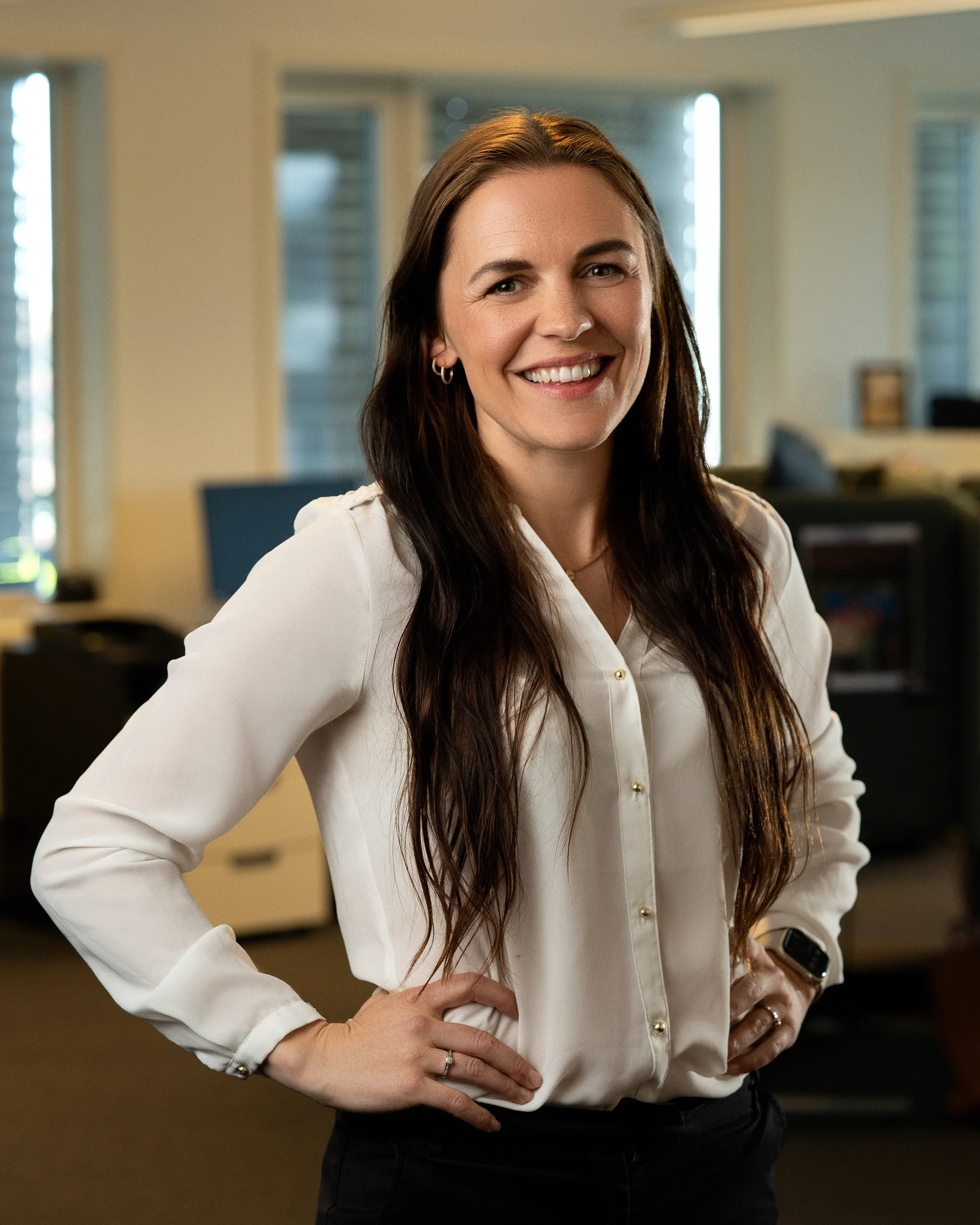
–“Tech or no tech environments, it is important to see people and understand each other. Build trust between us, a safe space, to try and fail and try again.”
Leading people, tech and product, with a “safe space” at the centre
Maja’s current role sits at the intersection of people, technology, and product. She calls it “the best of everything”, partly because of the people around her. “The most rewarding part is being part of the teams”, she says. “The privilege to work with great colleagues every day, with so much knowledge and drive.”
When she describes leadership, it’s not about performance theatre. It’s about trust and clarity. “Tech or no tech environments, it is important to see people and understand each other,” she says. “Build trust between us, a safe space, to try and fail and try again.”
Her leadership philosophy is practical and day-to-day. She wants people to end the week feeling they’ve achieved something. “I want to facilitate success for my colleagues,” she says, “both as individuals and as a team.” She talks about shared ownership and making sure contributions are visible, not just outcomes. “Share the responsibility and ownership within the team,” she says, so you highlight “everyone’s contribution as well as common achievements.”
She also keeps one foot in the technical context, without pretending she’s the smartest engineer in the room. “My colleagues are the experts,” she says. Her job is to have “enough knowledge to be the best possible support”, to ask the right questions, and to keep “an eye on the delivery”. There’s a manager’s version of technical excellence in that. Not being the hero. Ensuring the team can be.
–“I love working together with highly skilled and engaged people on deliveries which we know will make life easier for many, many end users”.
Data platform, fraud detection, and the impact she’s chasing
Right now, one of Maja’s most energising focus areas is establishing the Signicat Data Platform, and exploring what it unlocks. She’s interested in what data can enable for how Signicat does business, and what it can enable for future products.
Her eyes light up when she talks about the “worldwide fraud detection work”. She frames it as a responsibility as much as an opportunity: “How can Signicat as a company fight fraud?” and “How can we combine the Signicat Data Platform with our knowledge and new technologies to enable new product offerings to detect possible fraud attempts?”
In digital identity, that’s not abstract innovation. It’s impact. It’s fewer people being tricked, fewer accounts being taken over, fewer moments where “trust” becomes a hollow word. Maja’s motivation is simple: she likes working “together with highly skilled and engaged people”, on “deliveries which we know will make life easier for many, many end users”.
She also believes curiosity has to be protected on the calendar, not just encouraged in speeches. She makes space for investigation, and she treats feedback as fuel. “Make all feedback valuable to the receiver,” she says. “Be good with feedback, and it can and should be used as motivation to continue.”
–“10 years back, I was not sure if I had to choose growing my family and life with small kids vs growing my career. It turns out a combination was absolutely possible.”
Growth that fits real life
Maja’s Signicat story is also a leadership story shaped by life outside work. She joined as a full-stack developer in the Signature Team. “We were 3 team members back then,” she says, “and we had the best time developing the Signing solution.”
Then Signicat grew fast, and her career evolved with it. She also had three kids during that period, and one small detail says a lot about the culture she experienced. Her manager asked her, each time she returned from maternity leave: “What do you want to do now that you are back?” Maja took opportunities as they came. “New opportunities along the way, and I never said no to any of them.”
She’s candid about the mental shift leadership required. Moving roles meant changing focus and letting go of details. As a “previous perfectionist”, she says, learning what’s “good enough” in different situations was part of becoming effective. Prioritisation became a skill, not a compromise.
She also speaks directly to a question many people still carry quietly, especially parents: can you grow a career and a family at the same time? “10 years back, I was not sure if I had to choose growing my family and life with small kids vs growing my career,” she says. “It turns out a combination was absolutely possible.” She’s clear about what helped: opportunity, support, and the realism that limited time can make you surprisingly effective. “Big thanks to Signicat for that,” she says. “I will be forever grateful.”
–“If there is something you don’t know it is just because you haven’t learned it yet.”

Inclusion, in practice, not in a slide deck
Maja’s experience as a woman in tech is refreshingly direct. “Only good experiences,” she says. She’s always felt respected, and she frames success as a team composition issue, not a gender debate: “Everyone has different strengths, woman or not, and we need all in combination … for best success.”
Her advice to women aiming for leadership is equally practical: “Be you. Believe in you. Say yes to opportunities along the way.” And then the line that cuts through a lot of noise: “If there is something you don’t know yet or are uncertain about doing, it is not because you are a woman, it is because you haven’t learned it yet or tried it yet.”
Inclusion, to her, starts small and stays consistent. “Be kind to everyone, always,” she says. “Meet people with a smile and a ‘hey’. That might be the first smile they get that day.”
–“No obstacles are too high. Everything is solvable.”
What she’s excited about next
Maja talks about the future with a bias for action. She wants a “yes, let’s do it” mentality, teams where people use their strengths, and work that can improve over time with customers. “No obstacles are too high,” she says. “Everything is solvable.”
She also hopes for a future in tech where diversity is understood as a competitive advantage, not a compliance project. “The combination is our power!” she says.
And then she brings it back to the daily rhythm. She likes waking up early. She and her husband start the day with quiet coffee, then the morning turns into family logistics with “3 kids and our dog”. At work, she values “the right balance between meetings and focus time”, and she appreciates that Signicat allows her to plan her week so it “fits together, both at work and at home”.
When she unwinds, she goes outside. “Lucky me, Norway is a beautiful country - the whole year around,” she says. Mountains, sea, cabin, a short walk near home. “As long as I am doing something I am enjoying, I am recharging.” And sometimes, the most senior-leader answer of all: “Recharging for me is also doing absolutely nothing.”
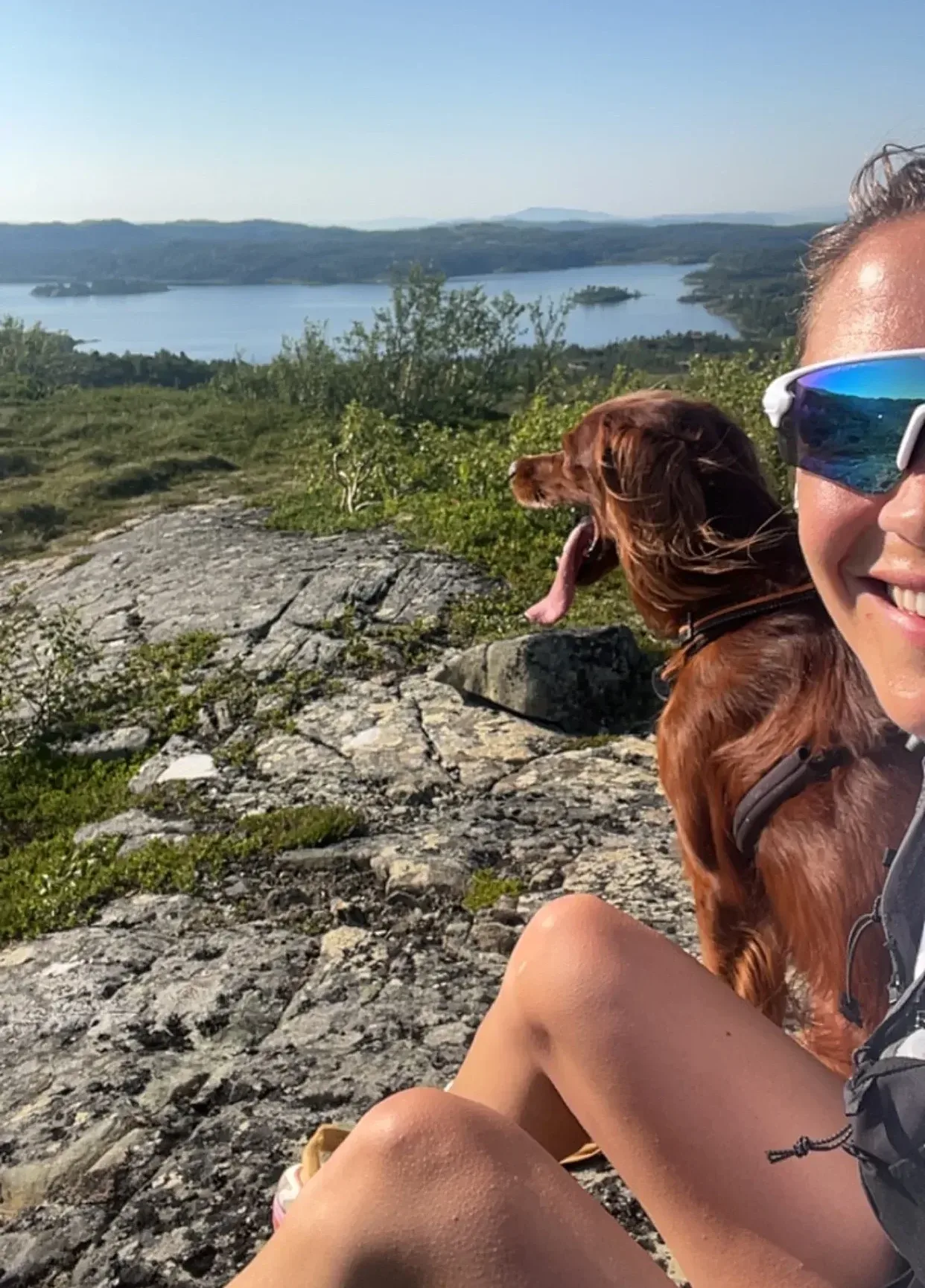
She ends on a note that feels like a quiet invitation to candidates, without trying to sell them anything. “Create the life for yourself that you want,” she says. “My everyday life is exactly how I want it to be.”
If you’re looking for a place to grow in digital identity, and you want leaders who take both ambition and humanity seriously, Maja’s story gives you a pretty good hint of what you might find at Signicat.
–Explore career openingsDo you want to work with people like Maja?